Why Problem-First Messaging Wins in Agriculture Marketing
By Laura Sutherly, Founder & Digital Marketing Strategist at Agtivation / February 2, 2026
Stop leading with your product specs. Your customers aren't searching for features—they're searching for solutions to specific problems they're losing sleep over. Problem-Match Messaging flips traditional marketing by starting with their exact pain points, using their language, before you mention what you sell. Result: Higher engagement, faster trust, more conversions.
You're scrolling through LinkedIn. Another ag tech company claims they're "revolutionizing farming." You keep scrolling. Why? Because they're talking about themselves, not your 3am worry about whether you can find a qualified agronomist before planting season.
If you want to be seen and trusted in today's crowded content environment, you need to flip the script.
Don't chase trends. Stay findable.
And the best way to stay findable right now is to speak to the real problems your ideal customer is already trying to solve. That's the magic of problem-match messaging.
Let's break down exactly what it is, why it works, and how you can use it to make your content convert.
Key Takeaways:
- Relevance First: Problem-match messaging gets attention because it shows immediate relevance.
- Avoid Alienation: Talking about your product first alienates buyers who don't yet trust you.
- Audience Language: Use the exact words your audience uses to describe their frustrations.
- The "Mirror" Effect: The best content opens with a mirror (reflecting the customer's problem), not a megaphone (shouting about your product).
Understanding Problem-Match Messaging
Problem-match messaging means leading every piece of content with a pain point your customer is already experiencing. It mirrors their frustration in their own language before you ever mention your solution.
Instead of:
"We help you streamline your farm management operations."
You say:
"You're buried in paperwork. Your margins are thinning, and you don't have time to chase down invoices."
It's not about sounding smart. It's about showing your audience: "We get what you're going through."
Once they see that, they're far more open to hearing what you do and how you can help.
Why It Works Better Than Product-First Content
Most buyers in ag aren't browsing the web looking for features. They're:
- Wondering why their labor costs are up 23% year-over-year
- Looking for ways to stretch their season without breaking their budget
- Frustrated by data systems that don't talk to each other
According to behavioral research on B2B buying, prospects spend 70% of their decision journey independently researching problems before they ever consider solutions. Problem-first content meets them exactly where they are in that journey.
Starting with features or accolades puts the burden on them to figure out if you're relevant. And that's too much work for someone already overloaded.
Case in point:
Product-first message: "[Software] helps optimize your farm inputs with precision tracking."
Problem-match message: "You're spending more on inputs, but your yields aren't improving and you can't see why."
One makes them curious. The other makes them click away.
Related: Learn how to capture this trust with 5 Testimonial Tactics Every Ag Equipment Dealer Should Steal Today
Real-World Ag Marketing Examples
Let's say you sell grain storage systems. You could say:
"Our bins are engineered for maximum capacity and airflow."
Or you could start with:
"You've had two loads downgraded this season because of moisture issues—that's $8,000 gone and a buyer relationship you're worried about losing."
Same product. But the second version tells the buyer: "We understand your real loss."
More industry-aligned examples:
For Ag Recruiters:
Don't lead with: "We provide end-to-end recruiting for agribusinesses."
Lead with: "You've been short a skilled operator for 3 months and your team is burning out."
For Crop Insurance Agents:
Don't say: "We offer tailored coverage for your risk profile."
Say: "You're seeing weather extremes you've never had to plan for and you're not sure your current policy will cover it."
Before/After Comparison:
BEFORE: "ABC Ag Solutions provides cutting-edge seed treatment technology trusted by farms across the Midwest."
AFTER: "Your seed investment is the biggest check you write all year. What if 15% of it never comes up because of early-season disease pressure you couldn't see coming?"
How to Identify the Right Problem to Match
Start by asking: "What's keeping my customer up at night?"
Then dig deeper:
- What are they blaming? (Weather? Regulations? Labor?)
- What solutions have failed them?
- What do they wish someone would finally fix?
Talk to your customers. Listen to sales calls. Read Reddit threads. The more specific the problem, the more powerful the message.
Going deeper: Use data analytics to improve your agribusiness marketing strategy and identify patterns in what your customers are actually searching for.
Using Their Words, Not Jargon
Your buyers don't say "I need better operational agility."
They say: "Everything's taking longer and I can't get good help."
Use their exact language—even if it's unpolished. Especially if it's unpolished.
Translate corporate speak:
"Precision agriculture integration" to "I've got five different apps that don't talk to each other"
"Agronomic optimization platform" to "I need to know which fields to hit first when I've only got three days"
"Multi-site inventory visibility" to "I drove 40 minutes to find out we were out of that part"
"Digital transformation" to "We're still doing it all on paper"
"Scalable compliance solutions" to "I don't want to get fined again"
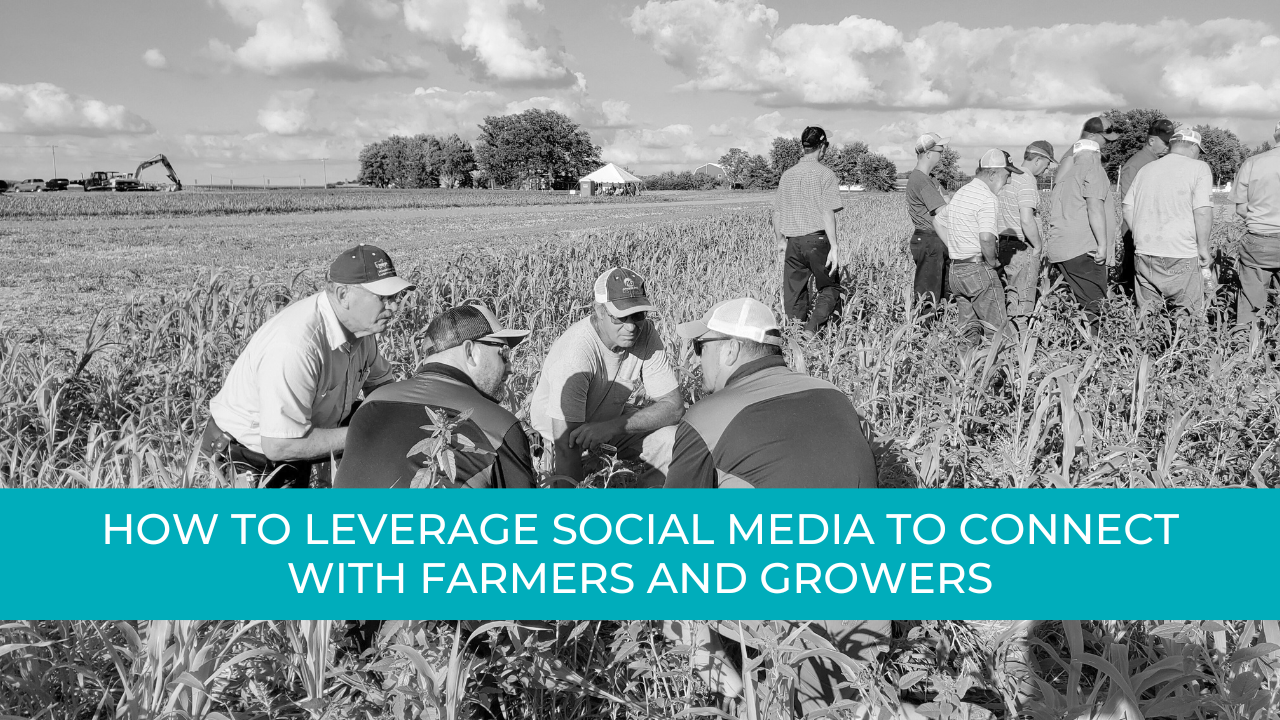
Pro tip: Listen to how farmers talk on social media. Learn how to leverage social media to connect with farmers and growers and capture their real language.
Common Problem-Match Messaging Mistakes
Too vague: "Farming is hard" doesn't hit. "You planted 1,200 acres in the rain window and now half your seed didn't germinate" does.
Solving the wrong problem: Don't assume. Validate through actual customer conversations.
Switching to sales mode too fast: Let the problem breathe. Don't immediately pivot to "and that's why our product..."
Want to avoid more common pitfalls? Read: 5 Marketing Mistakes Ag Equipment Dealers Make (+ How To Fix Them)
Test It: Problem-Statement Audit
Look at your homepage, about page, and your most recent social post.
Ask:
- Does it start with a real problem?
- Would your ideal customer say: "Yep, that's exactly what I'm dealing with"?
- Is the language simple, real, and specific?
If the answer's no to any of those—rewrite it.
Lead with their pain. Then show them the path out.
30-Second Test:
Pull up your homepage right now. Read the first sentence out loud to an imaginary farmer, dealer, or ag retailer.
Do they hear their problem? Or do they hear your product?
If you're not sure, text it to your best customer and ask: "Does this sound like something you'd actually say?"
Frequently Asked Questions About Ag Marketing
How do I know if I've found the right problem to lead with?
Test it. When you read your opener to someone in your target audience, they should say: "Yes. That's me." If not, refine it.
What if we serve multiple customer types with different problems?
Create separate content pieces for each. One-size-fits-all doesn't work anymore. Precision wins.
Is this approach only for websites?
No. It works in emails, video scripts, social captions, and even ads. Start with the problem everywhere.
Can this work for B2B ag brands too?
Absolutely. Even B2B buyers are humans with real frustrations. The principle still applies.
How often should I update my problem statements?
Quarterly is a good cadence. Industries shift. Stay current by talking to your customers regularly.
Conclusion
Your prospects are already having conversations in their heads about their problems. The question is: Are you joining that conversation, or are you interrupting it with a sales pitch?
Problem-match messaging isn't manipulation. It's empathy at scale. It's proving you've done the work to understand their world before asking them to understand your product.
In ag marketing, that difference is everything.
Your best marketing asset isn't your tech specs or your resume. It's your ability to say: "We get what you're going through. Here's how we can help."
Problem-match messaging makes your brand instantly relevant. It builds trust, opens conversations, and ultimately drives better conversions.
Forget fancy features. Lead with empathy.
Learn This Approach (With Expert Support)
The agriculture industry is changing fast—especially with AI transforming how we create content, analyze data, and connect with customers. You have two options: figure it out alone, or learn alongside experts who've been doing ag marketing since 1998.
Laura Sutherly and the Agtivation team teach agriculture businesses how to:
- Build problem-first messaging that converts
- Leverage AI tools without losing your authentic voice
- Create marketing systems you can own and scale
- Get expert feedback when you're stuck
Ready to learn how?
Schedule a strategy session and we'll show you how to implement this—with our guidance every step of the way.
- Explore resources:agtivation.com
- |New Window
- |Redirects to homepage
- Join the conversation: AI Marketing Experts podcast
- Start a conversation: info@agtivation.com | 937-335-3286
Whether you want to learn the system or have us build it with you, we're here to help.